
Architecture
X Vision is a system characterized by a modular architecture: the software is divided into functionally distinct modules, designed around a database in memory (RealTimeDataBase). The database is the main place of data exchange between modules.
The X Editor editing module integrates all the editing and configuration functions of the system components.
The X Vision architecture is open: this means that it is possible to add not only X Vision modules but also user-written programs, which access the RealTimeDatabase for reading and writing using the X Vision API (Application Programming Interface).
The system consists of configuration modules and runtime modules. The configuration modules allow you to define the type and any parameters of the processing performed by the runtime modules. All standard system configuration modules, although functionally distinct, are integrated into the X-Editor development environment.
The configuration data is stored on disk and can be recalled and changed at any time.
The following diagram schematically represents the essential architecture of the system:
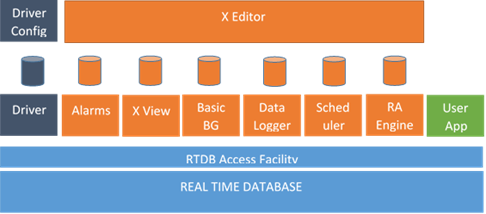
This architecture not only increases the availability of the system (the unlikely failure of a module does not impact on other functions), but also makes sure that there is no distinction between development and runtime: configuration and runtime modules can coexist without any change of operating mode, facilitating the test and correct the configuration and allowing any changes to avoid, as far as possible, the system restart.